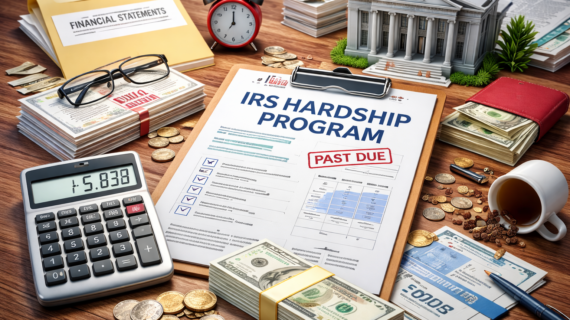
If you’re unable to pay your tax debt and worried about IRS collections, there’s good news — the IRS offers relief options for people facing financial hardship. One of the most important is called “Currently Not Collectible” (CNC) status, which can temporarily stop collection actions like wage garnishment or bank levies.
Many taxpayers in the United States don’t realize they may qualify for hardship relief. Instead of ignoring IRS notices or falling behind, understanding how this program works can give you breathing room and protect your finances.
If you’re comparing options, it’s also helpful to understand how long an IRS payment plan takes before deciding which solution fits your situation best.
What Is the IRS Hardship Program?
The IRS hardship program is a general term used to describe relief options for taxpayers who cannot afford to pay their tax debt.
The most common form of hardship relief is Currently Not Collectible (CNC) status. When your account is placed in CNC status, the IRS temporarily pauses collection actions, giving you time to recover financially.
This means you may be protected from aggressive collection efforts while you stabilize your financial situation.
What Does Currently Not Collectible (CNC) Mean?
When the IRS marks your account as CNC, it means they have determined that you cannot afford to make payments without causing financial hardship.
- Collection actions are paused
- You are not required to make payments
- Your account is reviewed periodically
However, it’s important to understand that your tax debt does not disappear. Interest and penalties may still accumulate. To understand how those costs grow over time, see this guide on IRS interest and penalty calculation.
Who Qualifies for IRS Hardship Status?
To qualify, you must show that paying your tax debt would prevent you from covering basic living expenses.
The IRS reviews your:
- Monthly income
- Living expenses
- Assets
- Financial obligations
If your income is not enough to cover allowable expenses and tax payments, you may qualify for hardship status.
What Expenses Does the IRS Consider?
The IRS uses national and local standards to determine reasonable living expenses.
- Housing and utilities
- Food and clothing
- Transportation
- Medical expenses
If your spending falls within these limits and you still cannot pay your taxes, your case becomes stronger.
How to Apply for IRS Hardship Status
Applying for hardship relief involves providing detailed financial information to the IRS.
- Gather documents showing income, expenses, and assets
- Complete IRS Form 433-A or 433-F
- Submit your financial information to the IRS
- Wait for review and approval
If you’re unsure whether hardship is the right option, you can compare it with IRS installment agreement approval to see which path makes more sense financially.
Understanding IRS Form 433-A and 433-F
These forms help the IRS evaluate your financial condition.
- Form 433-A: A detailed financial statement
- Form 433-F: A simplified version used in many cases
Accuracy is critical. Missing or incorrect information can delay or even prevent approval.
How Long Does It Take to Get Approved?
The timeline depends on your financial situation and how complete your documentation is.
- Simple cases may take a few weeks
- More complex cases can take several months
If you’re evaluating timelines, tools like this IRS monthly payment plan calculator can also help you estimate alternative solutions.
What Happens After Approval?
Once approved for CNC status, the IRS will pause most collection activities.
- No active collection enforcement
- No required monthly payments
- Periodic financial reviews
If your financial situation improves in the future, the IRS may resume collection efforts.
Does the IRS Forgive Your Tax Debt?
No, hardship status does not eliminate your debt. It only delays collection.
Your balance remains, and interest may continue to grow. However, this relief can give you time to regain financial stability.
Other IRS Relief Options to Consider
Depending on your situation, hardship may not be the only option available.
- Installment agreements (monthly payment plans)
- Offer in Compromise (settle for less than owed)
- Penalty relief programs
Choosing the right option depends on your ability to pay and long-term financial outlook.
Hardship vs Payment Plans
| Option | Payments Required | Best For |
|---|---|---|
| Hardship (CNC) | No | No ability to pay |
| Installment Plan | Yes | Stable income |
Why Applications Get Denied
Some applications are rejected due to:
- Incomplete financial details
- Unreported income
- Expenses exceeding IRS limits
- Unfiled tax returns
Providing accurate and complete information is essential.
Tips to Improve Your Chances
- Keep your financial records organized
- Follow IRS expense guidelines
- File all required tax returns
- Be honest and consistent in your application
Will the IRS Still Contact You?
Yes, the IRS may still contact you for updates or periodic reviews, but aggressive collection actions are paused.
How Often Is Your Status Reviewed?
The IRS typically reviews hardship cases every one to two years.
Can the IRS File a Tax Lien?
Yes, the IRS may still file a federal tax lien even if your account is in hardship status to protect its legal claim.
Frequently Asked Questions
Can I stop IRS collections immediately?
You must first apply and be approved before collections are paused.
Does hardship affect my credit?
Not directly, but tax liens may have an impact.
Can I apply online?
In some cases, yes, but financial forms are often required.
Is hardship permanent?
No, it is temporary and subject to review.
Final Thoughts
The IRS hardship program can provide real relief if you’re struggling financially and cannot pay your tax debt.
While it doesn’t erase what you owe, it can stop collections and give you time to recover.
If you believe you qualify, it’s worth exploring this option early before your situation becomes more difficult.