IRS bank levy is one of the most serious actions the IRS can take to collect unpaid tax debt. When a levy is issued, the IRS can freeze and seize funds directly from your bank account.
Many taxpayers only realize how serious the situation is when they suddenly lose access to their money. This can create immediate financial stress, making it difficult to pay bills, rent, or daily expenses.
This guide explains how IRS bank levy works, why it happens, how much the IRS can take, and how to stop or prevent it.
According to the IRS official levy guidance, the IRS has legal authority to seize property, including bank accounts, to collect unpaid taxes.
What Is IRS Bank Levy?
An IRS bank levy is a legal action that allows the IRS to take money directly from your bank account to pay unpaid tax debt.
Unlike a tax lien, which is a claim on your property, a levy actually takes your assets.
How IRS Bank Levy Works
The IRS follows a structured process before issuing a bank levy.
Step 1: IRS Sends Notices
The IRS begins by sending notices such as the IRS CP14 notice.
Step 2: Reminder Notices
If ignored, reminders like the IRS CP503 notice are sent.
Step 3: Final Warning
The IRS sends a final notice such as the IRS LT11 notice.
Step 4: Bank Levy Issued
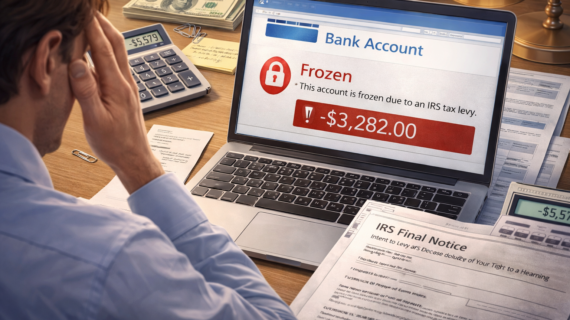
If no action is taken, the IRS contacts your bank and freezes your account.
What Happens When IRS Freezes Your Bank Account?
Once the IRS issues a levy:
- Your bank account is frozen
- You cannot withdraw money
- The bank holds funds for 21 days
This 21-day period gives taxpayers a chance to resolve the issue.
How Much Can the IRS Take?
The IRS can take all available funds in your account up to the amount of tax debt owed.
Unlike wage garnishment, there is no minimum protected amount in a bank levy.
Difference Between Bank Levy and Wage Garnishment
- Bank levy = one-time seizure of funds
- Wage garnishment = ongoing deduction from paycheck
See IRS wage garnishment explained.
Why IRS Issues a Bank Levy
The IRS issues a levy when:
- Tax debt remains unpaid
- Taxpayer ignores notices
- No payment arrangement is made
Learn more in what happens if you ignore IRS notices.
How To Stop IRS Bank Levy
Pay the Debt in Full
This immediately releases the levy.
Set Up Installment Agreement
See IRS installment agreement.
Apply for Offer in Compromise
See offer in compromise IRS guide.
Claim Financial Hardship
The IRS may release levy if hardship is proven.
Can You Reverse IRS Bank Levy?
Yes, in some cases the IRS may return seized funds if the levy was incorrect or causes hardship.
How To Avoid IRS Bank Levy
- Respond to IRS notices early
- File tax returns on time
- Set up payment plans
See how to respond to IRS notice.
Frequently Asked Questions
How long does bank levy last?
Usually one-time after 21-day holding period.
Can IRS take all money?
Yes, up to the debt amount.
Can levy be stopped?
Yes, if action is taken quickly.
Conclusion
IRS bank levy is a serious collection action that can freeze your finances instantly. Understanding how it works helps you take action early and protect your assets.
If you receive IRS notices, responding quickly can prevent levy and reduce financial damage.