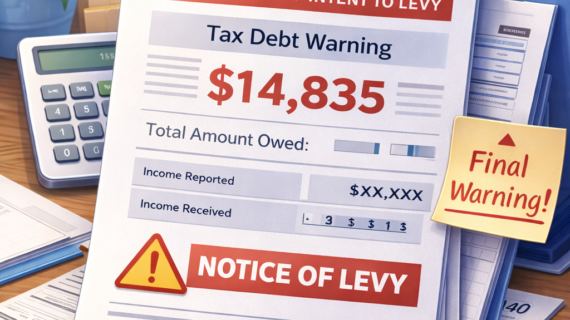
An IRS Notice LT11 is one of the most serious collection letters the Internal Revenue Service sends to taxpayers with unpaid tax debt. This notice is commonly known as a Final Notice of Intent to Levy, which means the IRS may begin seizing assets if the balance remains unpaid.
Receiving an IRS Notice LT11 can be alarming because it signals that earlier notices were ignored or unresolved. However, taxpayers still have options to respond and resolve the debt before enforcement action begins.
This guide explains the IRS Notice LT11 meaning, why the IRS sends this letter, what a levy is, and the steps you should take immediately after receiving the notice.
What Is IRS Notice LT11?
An IRS Notice LT11 is a formal letter informing taxpayers that the IRS intends to levy their assets if their tax debt remains unpaid. A levy allows the IRS to legally seize money from bank accounts, wages, or other assets.
This notice is considered the final warning before the IRS begins enforced collection actions.
It also informs taxpayers of their right to request a Collection Due Process hearing, which allows them to dispute the debt or negotiate payment options.
Why the IRS Sends Notice LT11
The IRS typically sends Notice LT11 after several earlier notices have been issued and the tax balance remains unresolved.
Common notices sent before LT11 include:
- Initial balance notice
- Reminder notices
- Collection demand letters
For example, taxpayers often first receive a balance due notice like the IRS CP14 notice explaining unpaid tax balances.
If the balance is not resolved, the IRS may continue sending additional notices such as IRS CP2000 notices that address income discrepancies.
Eventually, if the debt remains unpaid, the IRS escalates the situation by sending Notice LT11.
What Is an IRS Levy?
An IRS levy is a legal seizure of property to satisfy a tax debt. When the IRS issues a levy, it can take funds directly from bank accounts, wages, or other assets.
Common types of IRS levies include:
- Bank account levy
- Wage garnishment
- Seizure of property
- Social Security benefit levy
The LT11 notice warns taxpayers that these actions may begin if the debt is not addressed.
Information Included in an IRS Notice LT11
The IRS Notice LT11 letter includes several important pieces of information:
- Total tax debt owed
- Penalties and interest applied
- Deadline to respond
- Explanation of levy actions
- Right to request a Collection Due Process hearing
Carefully reviewing the notice helps taxpayers understand the seriousness of the situation and determine the next steps.
How Much Time Do You Have to Respond?
After receiving an IRS Notice LT11, taxpayers usually have 30 days to respond before the IRS may proceed with levy actions.
During this period, taxpayers can:
- Pay the balance in full
- Request a payment plan
- File an appeal
- Dispute the tax debt
Ignoring the notice may allow the IRS to begin seizing assets once the deadline passes.
Steps to Take After Receiving IRS Notice LT11
1. Do Not Ignore the Notice
The most important step is responding quickly. Ignoring the notice increases the risk of IRS enforcement actions.
2. Verify the Tax Debt
Review the tax year and balance listed in the notice. Compare it with your tax records and account transcripts.
3. Consider Payment Options
If the balance is correct, taxpayers may choose to pay the debt or request an IRS payment plan.
You can learn more about payment plans in our guide explaining IRS installment agreement requirements for tax debt repayment.
4. Request a Collection Due Process Hearing
Taxpayers have the right to request a hearing with the IRS Office of Appeals before the levy is issued.
This process allows taxpayers to challenge the debt or negotiate alternative solutions.
Options to Resolve IRS Tax Debt
Several options may help taxpayers resolve tax debt before the IRS begins levy action.
IRS Installment Agreement
A payment plan allows taxpayers to repay their balance through monthly payments rather than paying the full amount immediately.
Offer in Compromise
This program allows taxpayers to settle tax debt for less than the full amount owed if they meet strict financial requirements.
Currently Not Collectible Status
Taxpayers experiencing severe financial hardship may qualify for temporary suspension of collection activity.
What Happens If the IRS Issues a Levy?
If the IRS proceeds with a levy, financial institutions may be required to freeze bank accounts or redirect wages toward tax debt repayment.
Once a levy is issued, resolving the issue becomes more complicated and may require negotiation with the IRS.
How to Prevent IRS Levy Actions
The best way to prevent IRS levy actions is responding early to IRS notices and resolving tax balances before enforcement begins.
Taxpayers should:
- Respond to IRS notices promptly
- Verify tax balances
- Consider payment plans or settlement options
- Maintain compliance with future tax filings
Frequently Asked Questions
Is IRS Notice LT11 serious?
Yes. The LT11 notice is considered the final warning before the IRS may begin levy actions.
Can I stop an IRS levy after receiving LT11?
Yes. Taxpayers can stop a levy by resolving the balance, requesting a hearing, or negotiating payment options.
Does LT11 mean the IRS will take my bank account?
Not immediately. However, if the notice is ignored, the IRS may eventually levy bank accounts or wages.
Conclusion
The IRS Notice LT11 meaning is clear: it represents the final warning before the IRS begins seizing assets to collect unpaid taxes. While receiving this notice can be stressful, taxpayers still have important rights and options to resolve the issue.
Responding quickly, verifying the tax balance, and exploring payment solutions can help prevent levy actions and resolve tax debt responsibly.