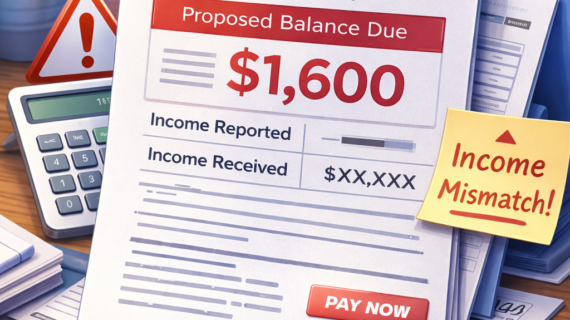
An IRS CP2000 notice is a letter sent by the Internal Revenue Service when there is a difference between the income reported on your tax return and the income information reported by employers, banks, or financial institutions.
Receiving this notice can be concerning because it often suggests that additional tax may be owed. However, an IRS CP2000 notice is not automatically an audit. Instead, it is a proposed adjustment based on information reported to the IRS.
This guide explains what the notice means, why you may receive one, and the steps you should take to resolve the issue quickly.
What Is an IRS CP2000 Notice?
An IRS CP2000 notice is issued when the IRS detects discrepancies between the income reported on your tax return and the income reported by third parties such as employers or financial institutions.
These third-party income reports typically include:
- W-2 wage statements
- 1099 forms from freelance or contract work
- Interest income reported by banks
- Investment income reported by brokerage accounts
If the IRS believes additional income was not reported correctly, they send a CP2000 notice proposing changes to your tax return.
Why You Might Receive a CP2000 Notice
The most common reason for receiving an IRS CP2000 notice is unreported or incorrectly reported income.
Examples include:
- Forgetting to report freelance income
- Missing a Form 1099 from contract work
- Incorrect reporting of stock transactions
- Differences in retirement account withdrawals
The IRS receives copies of income documents directly from financial institutions and compares them with your filed tax return.
Information Included in an IRS CP2000 Notice
The CP2000 notice typically contains several important pieces of information:
- The tax year being reviewed
- The income discrepancy identified
- The proposed tax adjustment
- Penalties and interest added to the balance
- Instructions on how to respond
The notice explains whether the IRS believes you owe additional tax or whether an adjustment could result in a refund change.
Is a CP2000 Notice an Audit?
Many taxpayers assume receiving an IRS CP2000 notice means they are being audited. In most cases, this is not true.
A CP2000 notice is generated automatically by the IRS Automated Underreporter system when income differences are detected. However, ignoring the notice could eventually lead to more serious IRS action.
Steps to Take After Receiving an IRS CP2000 Notice
1. Review the Notice Carefully
Start by reading the notice carefully to understand what income discrepancy the IRS identified.
2. Compare With Your Tax Records
Check your tax return and supporting documents to verify whether the IRS adjustment is correct.
3. Decide Whether You Agree or Disagree
If you agree with the proposed adjustment, you can sign the response form and submit payment.
If you disagree, you must send documentation explaining why the IRS information is incorrect.
4. Respond Before the Deadline
Most CP2000 notices require a response within 30 days. Responding quickly helps prevent additional IRS notices.
What Happens If You Ignore a CP2000 Notice?
If the notice is ignored, the IRS may proceed with the proposed adjustment and eventually issue a statutory notice of deficiency.
This can eventually lead to IRS collection actions if the balance remains unpaid.
Options If You Cannot Pay the Tax Balance
If the CP2000 notice results in a balance you cannot pay immediately, several options may help resolve the tax debt.
IRS Installment Agreement
A payment plan allows taxpayers to repay their balance through manageable monthly payments. If you need time to pay your tax debt, you can learn more about the IRS installment agreement requirements and payment plan options.
Penalty Relief Options
In some situations, taxpayers may qualify for penalty abatement if they have reasonable cause or meet eligibility requirements. You can read more in our guide explaining IRS penalties for late filing and how penalties are calculated.
Tips to Avoid CP2000 Notices in the Future
- Report all income sources accurately
- Review all W-2 and 1099 forms before filing
- Track investment transactions carefully
- Keep detailed tax records
Frequently Asked Questions
How serious is an IRS CP2000 notice?
A CP2000 notice is not considered a full IRS audit, but it should still be addressed promptly to avoid further action.
Can the IRS CP2000 notice be incorrect?
Yes. In some cases, the IRS may not have complete information about deductions or transactions.
How long do I have to respond?
Most notices require a response within 30 days from the date of the letter.
Conclusion
An IRS CP2000 notice is issued when the IRS identifies discrepancies between your reported income and third-party records. While receiving the notice may feel stressful, most cases can be resolved by reviewing your tax records and responding to the IRS promptly.
Understanding how IRS notices work helps taxpayers resolve tax issues efficiently and avoid further collection actions.