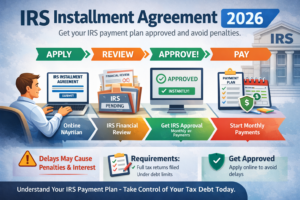
If you cannot pay your tax debt immediately, understanding IRS installment agreement requirements can help you resolve your tax balance without facing aggressive collection actions. The Internal Revenue Service allows taxpayers to repay tax debt through structured monthly payment plans known as installment agreements.
An IRS installment agreement gives taxpayers time to repay their outstanding balance while remaining compliant with federal tax obligations. Without a payment plan, the IRS may begin enforcement actions such as bank levies, wage garnishments, or federal tax liens.
If you want to understand how penalties accumulate when taxes are unpaid, read our guide here:
https://coretaxpajak.id/irs-penalty-for-late-filing.
What Is an IRS Installment Agreement?
An IRS installment agreement is a payment arrangement that allows taxpayers to pay their tax debt over time rather than paying the full amount immediately. These agreements help taxpayers remain compliant while gradually resolving outstanding tax liabilities.
The IRS offers multiple payment plan options depending on the amount owed and the taxpayer’s financial situation. Most taxpayers with manageable tax balances qualify for simplified payment arrangements.
Why the IRS Offers Payment Plans
The IRS understands that financial hardship can make it difficult for taxpayers to pay their full tax balance at once. Installment agreements allow taxpayers to meet their obligations without triggering aggressive collection actions.
Without a payment plan, the IRS may initiate enforcement procedures including:
- Bank account levies
- Wage garnishment
- Federal tax liens
- Property seizure
You can learn more about enforcement actions in our related article:
https://coretaxpajak.id/irs-bank-levy.
IRS Installment Agreement Requirements
To qualify for a payment plan, taxpayers must meet several IRS installment agreement requirements. These requirements ensure the IRS can properly evaluate your ability to repay tax debt.
1. All Tax Returns Must Be Filed
The IRS requires taxpayers to file all missing tax returns before requesting a payment plan. If any returns remain unfiled, the IRS will deny the installment agreement request.
2. You Must Owe a Tax Balance
Payment plans only apply when a taxpayer owes taxes after filing their return. The IRS calculates the total balance including penalties and interest.
3. Agreement to Monthly Payments
Taxpayers must agree to make consistent monthly payments until the tax balance is fully paid.
4. Compliance With Future Taxes
After establishing an installment agreement, taxpayers must remain compliant by filing future tax returns and paying current taxes on time.
Types of IRS Installment Agreements
The IRS offers different payment plans depending on the amount of tax debt owed.
Short-Term Payment Plan
Short-term plans allow taxpayers to pay their balance within 180 days.
Long-Term Installment Agreement
This plan allows taxpayers to repay tax debt over several years through monthly payments.
Simplified Installment Agreement
Taxpayers who owe less than $50,000 often qualify for simplified installment agreements with easier approval requirements.
How to Apply for an IRS Installment Agreement
Taxpayers can apply for an installment agreement through several methods.
Apply Online
The IRS Online Payment Agreement system allows taxpayers to request a payment plan quickly.
Apply by Mail
Taxpayers can complete IRS Form 9465 to request a payment plan through the mail.
Apply by Phone
You may also contact the IRS directly to discuss installment agreement options.
How Monthly Payments Are Determined
The IRS calculates monthly payment amounts based on several financial factors:
- Total tax debt owed
- Income level
- Living expenses
- Ability to pay
The goal is to create a payment plan that resolves the debt within the IRS collection statute period.
Fees for IRS Payment Plans
Setting up an installment agreement may require a user fee. The amount depends on how the payment plan is established.
- Online setup fee
- Phone or mail application fee
- Reduced fee for low-income taxpayers
Even with a payment plan, penalties and interest may continue until the balance is fully paid.
Benefits of an IRS Installment Agreement
Payment plans provide several advantages for taxpayers dealing with tax debt.
- Avoid aggressive collection actions
- Resolve tax debt gradually
- Reduce financial stress
- Maintain compliance with IRS rules
What Happens If You Miss a Payment?
Missing payments can cause the IRS to terminate the installment agreement. If the agreement is terminated, the IRS may resume collection actions such as levies or garnishments.
If financial hardship occurs, taxpayers should contact the IRS immediately to discuss alternative arrangements.
Alternatives to IRS Installment Agreements
If you cannot afford a payment plan, other tax relief options may be available.
Offer in Compromise
This program allows taxpayers to settle tax debt for less than the total amount owed.
Currently Not Collectible Status
Taxpayers experiencing severe financial hardship may qualify for temporary suspension of collection actions.
Tips for Managing an IRS Payment Plan
- Set up automatic payments
- Pay more than the minimum when possible
- Stay current with future tax obligations
- Respond to IRS notices promptly
Frequently Asked Questions
How long can an IRS installment agreement last?
Most payment plans last until the tax debt is fully paid or the IRS collection statute expires.
Can the IRS reject a payment plan?
Yes. The IRS may reject installment agreement requests if eligibility requirements are not met.
Does a payment plan stop penalties?
Penalties and interest may continue until the balance is fully paid.
Conclusion
Understanding IRS installment agreement requirements helps taxpayers manage tax debt without facing aggressive collection actions. By applying for a payment plan early and remaining compliant with IRS rules, taxpayers can resolve their tax balance while protecting their financial stability.